

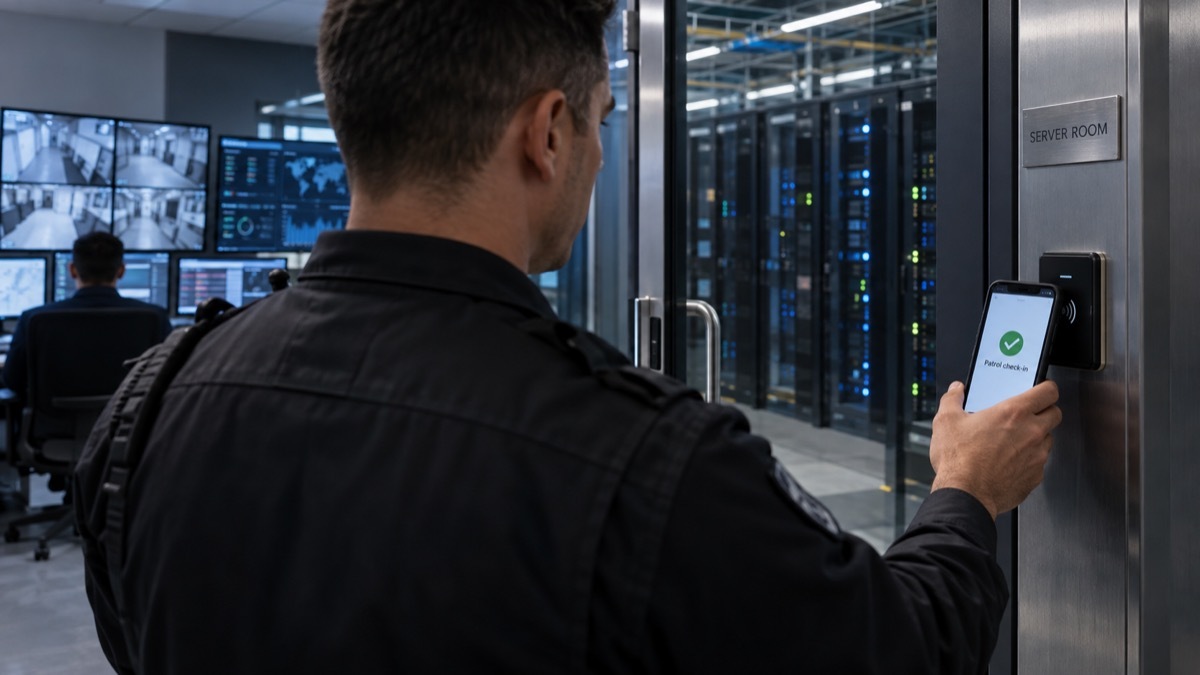
Most cybersecurity teams assume their threat detection systems capture everything that matters. They monitor network traffic, endpoint activity, and access logs. But they miss something fundamental: they have no visibility into whether anyone actually verified that a security guard was physically present at a critical location when they claimed to be there. Systems that allow you to create NFC tags for locations make this verification auditable and real-time, turning physical security operations into a verifiable data layer that cybersecurity teams desperately need. Without it, your threat picture stays incomplete.
Key Takeaways
- Physical security operations generate real-time verification data that cybersecurity teams routinely miss, creating blind spots in incident response and breach prevention.
- Disconnected patrol systems leave no audit trail of when and where guards actually performed their duties, making it impossible to correlate physical incidents with cyber threats or insider activity.
- Integrated verification (NFC tags, real-time incident logging, centralized patrol records) gives both security operations and cybersecurity teams the visibility needed to prevent and respond to threats faster.
- Liability and compliance now demand that security operations produce verifiable, timestamped records; outdated manual processes no longer meet industry or legal standards.
Why It Matters
The assumption that cybersecurity and physical security are separate domains is now costing organizations real money. When a data breach occurs, investigators ask: Was someone unauthorized in the building? Were any guards actually on patrol that night? Did anyone log entry to a restricted area? Most organizations cannot answer these questions because their physical security records are fragmented, manual, or non-existent.
The problem is not that security companies don’t care about verification. The problem is that most still rely on paper logs, sporadic radio checks, or guards manually entering notes hours after an incident. No timestamp. No proof of location. No correlation with network activity or access logs. Cybersecurity teams see a breach but have no physical context. Security operations managers cannot prove what actually happened. Both teams are flying blind.
This gap has real consequences. Insider threats go undetected because physical presence verification is not connected to system access logs. Incident response takes longer because security operations data is locked in disparate systems. Compliance audits fail because there is no verifiable record of guard tours or incident escalation. And when liability claims arise, the lack of timestamped, centralized records makes defense far more expensive.
The Verification Gap in Your Threat Picture
Modern cybersecurity tools are sophisticated. They detect anomalous network behavior, flag unauthorized access attempts, and alert on suspicious user activity. But they answer only one part of the question: what happened in the digital realm. They do not answer: was there physical evidence of that threat? Did a guard spot anything unusual that correlates with the cyber event? Was the area even being monitored?
Consider a common scenario. Your SIEM detects unusual data exfiltration from a facility at 2 a.m. You immediately assume remote threat, but you have no way to know if someone was physically inside the building. You cannot quickly verify whether a guard was actually patrolling that floor, whether doors were locked, or whether anyone accessed the server room. Your incident response team is working with incomplete data, making it harder to determine if this is a nation-state actor or an insider with physical access.
When physical security operations rely on manual verification or post-shift notes, this correlation is impossible. Guards might not remember if they checked a specific area. Written logs are ambiguous or incomplete. Hours pass before anyone even catalogs what happened. By then, the cyber investigation is already underway without the physical context it needs.
How Real-Time Verification Creates an Auditable Security Layer
Integrated verification systems solve this by creating a timestamped, location-verified record of what guards actually did. NFC tag verification, for example, forces guards to physically scan a location at a specific time. That scan is immediately logged with exact coordinates, timestamp, and guard identity. It cannot be faked. It cannot be logged retroactively. It creates an auditable trail.
When a cyber incident occurs, security operations can instantly pull that record. Did a guard check the server room at the time the anomalous activity was detected? If yes, did they notice anything unusual? If no, the absence of a verification scan is itself valuable data, suggesting the area was unmonitored when the threat occurred. Now cybersecurity teams have the physical context they need to answer the question: is this a cyber-only threat, or did physical access enable it?
This integration does three things simultaneously. First, it accelerates incident response by eliminating the search for fragmented records. Second, it creates an irrefutable audit trail that satisfies compliance and liability requirements. Third, it gives both teams a shared operating picture of what actually happened.
The Operational and Liability Case for Centralized Verification
Beyond cybersecurity, centralized verification addresses a problem that has plagued security firms for decades: proving what actually happened. When a client claims nothing was happening at their facility during a specific hour, security operations managers often cannot prove otherwise. When an incident occurs and the question of guard presence arises, the answer is buried in incomplete notes or radio logs.
Modern platforms consolidate patrol records, incident reports, guard schedules, and verification data into a single, searchable system. Managers no longer have to piece together the truth from multiple sources. They have a verified record. This matters for internal accountability, client satisfaction, and legal protection. When disputes arise, the data speaks clearly.
Scheduling becomes smarter too. Instead of assuming guards completed their tours, managers can see exactly where and when verification occurred. If a tour was missed, it is flagged immediately, not discovered weeks later in a compliance audit. Staffing decisions become data-driven rather than reactive.
A Real-World Example: Incident Response With and Without Verification
Scenario: A retail client reports inventory shrinkage. The suspected loss occurred over a three-day period. The cybersecurity team rules out point-of-sale system compromise, so the focus shifts to physical theft or inside job.
Without integrated verification: The security manager manually reviews guard schedules and radio logs. Times are approximate. One guard’s shift notes are missing. Three days of investigation later, the picture is still unclear. Was the area monitored? Which specific times had no coverage? Client is frustrated. The investigation stalls.
With integrated verification: The manager pulls a real-time report from the patrol system showing exactly which guard was in which location at what time. NFC tag scans show the inventory area was checked every 90 minutes. One guard’s verification scan is missing from a specific window on Day Two between 10 p.m. and midnight. That missing scan is flagged. Immediate follow-up reveals the guard was reassigned that night due to a scheduling error. Now the investigation has direction: focus on that window, that area, and the staffing gap that existed. Client gets answers in hours instead of days.
The difference is verification data. The first scenario is slow, incomplete, and defensible only if you are lucky. The second is fast, precise, and auditable.
Actionable Steps to Close Your Verification Gap
- Audit your current guard tour process. Ask: do you have verifiable proof that guards are actually visiting assigned locations? Are those verifications timestamped? Are they centralized and searchable? If the answer to any of these is no, you have a verification gap.
- Implement location-based verification technology. NFC tags, GPS verification, or QR code scans create auditable proof that a guard was physically present at a location at a specific time. Choose a method that fits your facilities and guard workflow.
- Centralize incident and patrol records. Stop using multiple systems, paper logs, or email chains to manage security data. Move to a single platform where all incident reports, guard verifications, schedules, and client communications live in one place.
- Connect security operations to your incident response process. When a cyber or physical incident is reported, your incident response team should be able to instantly pull relevant guard tour records, patrol data, and verification logs. Make this a standard part of your playbook.
- Train managers on data-driven decision-making. Verification data is only valuable if leaders use it. Make sure managers know how to interpret patrol records, spot coverage gaps, and correlate physical data with operational decisions.
- Review your compliance and liability requirements. Many industries now require verifiable, timestamped security records. Make sure your verification system produces the documentation your legal and compliance teams need.
Conclusion
Physical security verification is no longer a nice-to-have operational feature. It is a foundational layer of your organization’s ability to detect, respond to, and defend against threats. When cybersecurity teams cannot see physical security data, and when physical security operations cannot produce verifiable records, both teams operate with blind spots.
Integrated verification systems close that gap. They give security operations the tools to prove what actually happened. They give cybersecurity teams the context they need to complete their threat picture. They give clients and compliance auditors the documentation that now defines professional security service delivery.
The firms that invest in real-time, centralized, auditable verification now compete on a different level. They respond faster. They prevent more incidents. They defend themselves better when disputes arise. For everyone else, the verification gap is becoming a liability.
FAQ
What is physical security verification and why does it matter?
Physical security verification is the practice of creating an auditable, timestamped record that a security guard actually visited a location at a specific time. It matters because it transforms security operations from a trust-based system into a data-based system, giving both operational managers and cybersecurity teams visibility into whether patrol duties were actually performed and when coverage gaps occurred.
How does NFC tag verification work in security operations?
NFC tags are small, passive chips placed at key locations throughout a facility. When a guard visits that location, they scan the tag using a mobile app, which immediately records the timestamp, guard identity, and location coordinates. This creates an instant, verifiable record that cannot be faked or logged retroactively, unlike manual paper logs or radio checks.
Can verification data help with cybersecurity incident response?
Yes. When a cyber incident occurs, investigators need to know whether the affected area was under physical surveillance at the time. Verification records answer that question instantly. If a data breach coincides with a period when no guard tour verification occurred in that location, it suggests either inside access or an unmonitored vulnerability, fundamentally changing the investigation strategy.
What compliance benefits come from centralized verification records?
Most industries now require verifiable, timestamped security records for audit and liability purposes. Centralized verification systems automatically produce these records, eliminating manual log-keeping, reducing ambiguity, and providing evidence that security protocols were actually followed, which is essential for compliance certifications and legal defense.
How does verification data improve security operations management?
Managers can instantly see which guards completed their tours, which locations were verified at what times, and where coverage gaps exist. This transforms staffing decisions from reactive to data-driven, allows real-time correction of missed patrols, and eliminates the need to reconstruct security activity after incidents occur.
Does verification technology replace human security staff?
No. Verification technology makes human security staff more accountable, more visible, and more effective. It does not replace guards; it creates a clear record of what they actually accomplished, making their work auditable and allowing managers to deploy them more strategically based on verified operational data.